



Tesamorelin 10mg
A rhythm-shaping peptide known for the way it taps into the body’s natural growth and metabolic signaling patterns. Tesamorelin brings a lifted, sculpted energy to routines centered on balance, vitality, and internal body composition flow.
For laboratory research use only. Not for human consumption. Not for medical, veterinary, or household use.

$165.00 Original price was: $165.00.$109.00Current price is: $109.00.
Tesamorelin 10mg carries a clean, energized presence that has made it a favorite in metabolic and body-recomposition peptide discussions. Built as a stabilized growth hormone–releasing factor (GHRF) analog, Tesamorelin is widely referenced in scientific literature for its connection to pathways involving metabolic pacing, fat-distribution rhythms, and the body’s natural growth hormone pulse.
Researchers often highlight Tesamorelin for its interaction with the deeper biological networks that help the body determine structure, tone, and balance. Its influence is frequently explored in contexts involving midsection composition, natural fat-processing behavior, and overall metabolic organization.
Its profile blends clarity and energy:
• tied to growth-related signaling,
• associated with metabolic patterning,
• and often linked to body-composition themes in modern peptide conversations.
Tesamorelin moves with intention — steady, focused, and aligned with the body’s own rhythm for shaping itself from the inside out. It’s a natural fit for collections built around metabolic health, recomposition, vitality, and the body’s instinctive balancing cycles.
Elegant in structure, refined in action, and unmistakably modern, Tesamorelin stands as one of the most recognized peptides in today’s body-sculpting and metabolic landscape.
| Form | Lyophilized powder |
|---|---|
| Purity | ≥99% (HPLC verified) |
| Content | 10mg Tesamorelin |
| Appearance | White to off-white powder |
| Storage | –20°C for long-term stability, Store at 2–8°C. Protect from light. |
| Use | Lab use only |
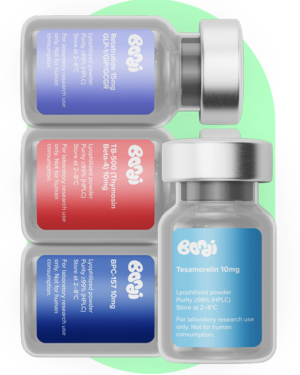
Frequently bought together
(see additional information)
Frequently Asked Questions
What are peptides and how do they work?
Peptides are short chains of amino acids that act as signaling molecules within biological systems. In research and wellness-focused applications, they are studied for how they support communication at the cellular level, influencing specific pathways and processes based on their structure and function.
Are peptides safe?
Peptides are widely studied and generally well-tolerated when produced to high purity standards and used within appropriate, controlled protocols. Ongoing research continues to refine best practices, making quality sourcing, professional oversight, and adherence to established guidelines essential.
How do I self-administer peptides?
Guidance from a licensed provider is essential to ensure proper handling, dosing parameters, and risk management, as protocols can vary widely depending on the peptide and intended application.
How long until I see results?
Timelines can vary based on the specific peptide, protocol design, and individual response. Some applications are studied for short-term signaling effects, while others may require consistent use over time to observe measurable changes.
What is included with my peptide purchase?
Each order includes the peptide in its supplied form along with clearly labeled packaging and relevant quality documentation when available. This ensures transparency, traceability, and confidence in the integrity of the material provided.
Do I need to refrigerate my peptides?
Storage requirements depend on the specific peptide and its formulation. Many peptides are supplied in a stable, lyophilized form and benefit from cool, dry storage, with refrigeration often recommended after reconstitution based on professional guidance and manufacturer specifications.
Where can I find recommended dosage?
Dosage information is not provided directly with our products, as protocols should be established by a qualified medical professional. For general educational context, we offer articles that discuss peptide research and protocol considerations—these are intended for informational purposes only and do not replace professional guidance.
Where do I inject my peptide?
Administration is commonly discussed in research contexts as either subcutaneous or intramuscular, depending on the peptide and protocol. A licensed medical professional must be consulted before proceeding to determine the appropriate method, technique, and safety considerations for your specific situation.
How do I reconstitute my peptide?
Reconstitution typically involves combining a sterile diluent with a lyophilized peptide to return it to a usable form, though methods can vary by compound. A licensed medical professional should always provide guidance on proper technique, materials, and handling to ensure accuracy and safety.
For laboratory research use only.
Want more peptides?
